


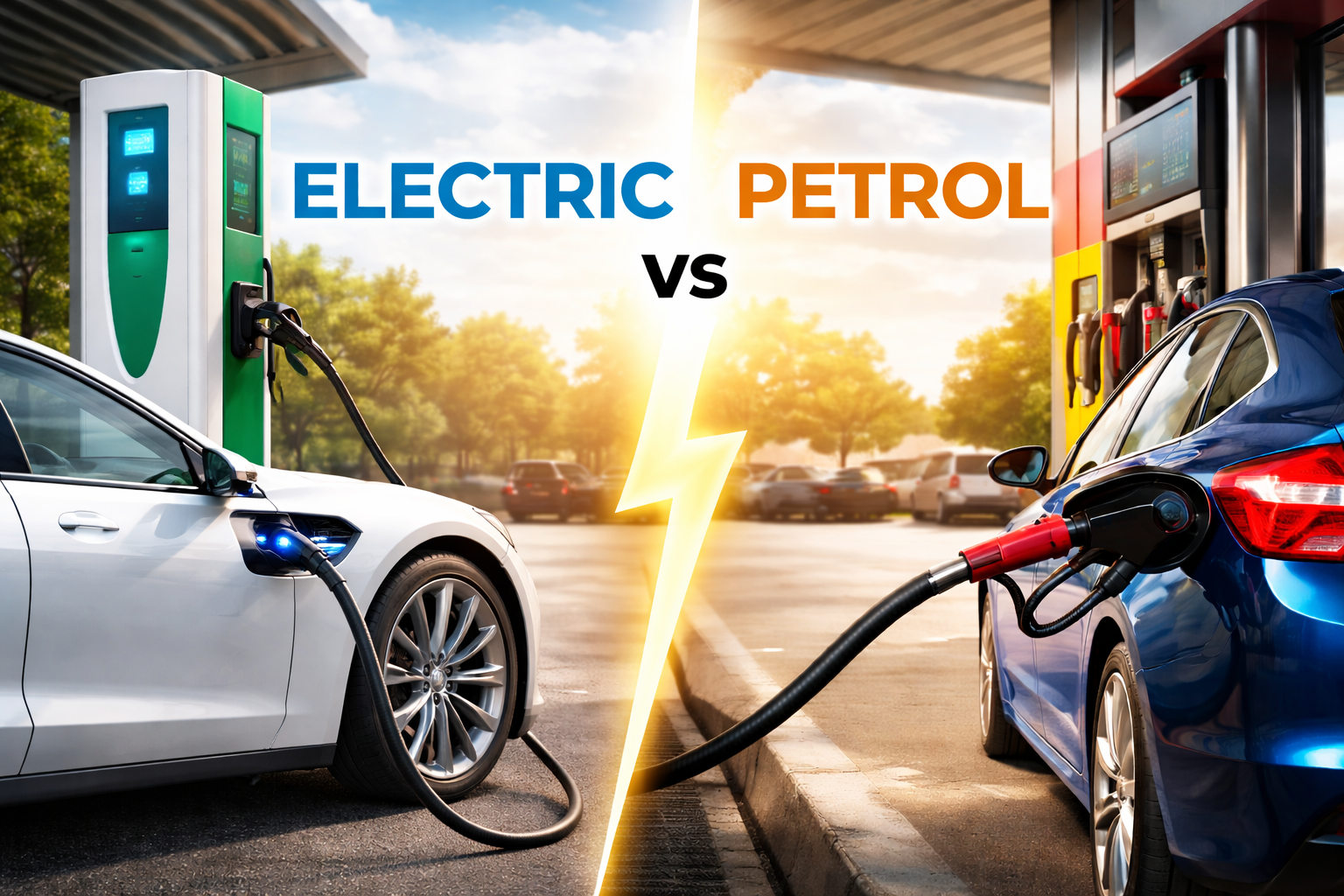
Introduction
- Introduction with data: Fuel worth ₹105/litre in 2026 translates to ₹6.5/km compared to EV’s ₹1.2/km. Savings amounting to ₹65,000 per annum in monthly driving of 1,000km can be made.
- This article explains the real cost war between electric vs petrol that you should be aware of.
- Great for Chennai residents, families, and fleet operators.
Understanding Electric vs Petrol Cars
Electric Vehicle Basics
- Electrical engines run on batteries; braking systems are energy-saving.
- Lack of engine oil; fewer parts require less maintenance.
Petrol Car Fundamentals
- An internal combustion engine requires fuel; requires frequent maintenance.
- Fast re-fueling but increasing prices affect the bottom line.
Key TCO Components
- Purchase price, operating costs (70% contribution to TCO), maintenance, and residual value.
The Real Cost Battle: Upfront Purchase Prices
EV vs Petrol Sticker Prices
- Electric vehicles cost ₹3-5L more than conventional cars (Nexon EV ₹16L versus Petrol ₹12L).
- Subsidies under FAME III bring the difference down by ₹1.5L plus regional subsidies.
Financing and Tax Benefits
- Cheaper loans (7.5% vs 9.5%).
- Road tax is waived for electric cars.
Running Costs Showdown: Fuel vs Charging
Contents
Per-Km Cost Breakdown
- Petrol: ₹6.5/km (15kmpl × ₹105/L).
- EV: ₹1.2/km (0.15kWh/km × ₹8/kWh home charging).
Monthly Cost Comparison
- Petrol: ₹6,500 compared to EV: ₹1,200 saving ₹5,300 per month.
Maintenance and Long-Term Ownership Costs
5-Year Service Costs
- Petrol: ₹6.5/km (15kmpl x ₹105/L)
- EV: ₹1.2/km (0.15kWh/km x ₹8/kWh home charge).
Insurance, Tyres, and Resale
- EV insurance 15% higher but resale holds 55% vs petrol 40%.
Step-by-Step TCO Calculation Guide
How to Run Your Numbers
- Track monthly km driven.
- Input local petrol/electricity rates.
- Factor subsidies, maintenance estimates.
- Use online calculators for precision.
Practical Applications: Who Wins When?
City Commuting (Chennai Traffic)
- EV dominates through home charging and brake
Highway Long Drives
- Petrol wins on refuel speed, charger gaps.
Fleet Operations
- Delivery services save 45% TCO with EVs.
Leading EVs vs Petrol Models Comparison 2026
| Model | Type | 5Yr TCO | Monthly Running | Best For |
| Nexon Petrol | Petrol | ₹20.5L | ₹6,500 | Highways |
| Nexon EV | EV | ₹18.2L | ₹1,200 | City |
| Punch Petrol | Petrol | ₹17.8L | ₹6,200 | Budget |
| Punch EV | EV | ₹16.1L | ₹1,100 | Urban |
Benefits and Limitations of Electric vs Petrol
Read also : How Automation is Transforming Risk Detection and Clause Extraction
EV Pros
- 75% savings on fuel, no emissions, noiseless and smooth operation.
EV Cons
- High initial price, long charging time (30 min fast), range issues.
Petrol Pros
- Easy availability, immediate refill, and tried-and-true reliability.
Battery Price Crash
- A minimum of 500km range, battery costs slashed by 25%.
Rapid Growth in Charging Infrastructure
- Over 20,000 fast charge points by December 2026.
Petrol Price Increase
- Expected ₹115/L pushing TCO tipping point.
FAQ
- Why are EVs cheaper compared to petrol in the long run?
Costs of operation are 5x lower (₹1.2/km versus ₹6.5/km) plus 50% reduced maintenance costs.
- How much does it cost to operate EV per km in India by 2026?
Charging at home costs ₹1-1.5/km while using fast charging points costs ₹3/km.
- Which vehicle is cheaper to maintain?
Savings of 40%-60% can be achieved due to no oil replacements, etc.
- Break-even point for EV and petrol cars?
25-35 thousand kilometers usually bridge the price difference.
- Best budget EV for under ₹20L?
Tata Punch EV & Nexon EV post FAME discounts.
- Cost comparison: Home charge or fuel pump?
Home charge: 6 times cheaper than petrol per km.
- Resale value: EVs vs Petrol Cars?
EVs have a 55% residual value after 5 years vs petrol’s 40%.
- Subsidy under FAME III by 2026?
Direct discount from ₹1-1.5L + tax exemptions.
- Drive on highways: EVs vs Petrol?
Petrol; fast charging is catching up fast.
- Cost of battery replacement post-warranty?
₹4-6 lakh after 8 years/1.6 lakh kilometers—seldom needed with today’s batteries
Final Thoughts
- Electric v Petrol – The Real Cost War You Need To Know – EVs beat petrol cars TCO by ₹2L in 5 years
- Takeaways: Operating costs matter most, city driving gives most savings, charging network expansion fast.
- Are you ready for a change? Try out Tata EV cost calculator or test-drive Tata Nexon EV.if you found this article helpful, share it with your friends for more such News subscribe newssy.in.