


Introduction – Why Apple Weather Icons Are Important
- Opening: “You wake up, check your iPhone, and notice a cloud with raindrops—is it time for an umbrella or will you get wet?”
- Explanation: The Apple Weather app employs tiny icons to depict the sun, rain, snow, fog, hail, and other types of weather in their predictions.
- Target audience: The typical iPhone user, parents, people who work outdoors, students, fitness lovers, and travelers looking for a way to understand the weather in seconds.
- Setting expectations: At the end of this tutorial, you will be able to identify all the symbols and their usage in making sound decisions.
How Apple Weather Icons Work
- Describe where you see icons: On Today screen, Lock Screen, Weather app “Hourly” and “Daily” tabs, and “Now” cards.
- Note: The icons sync to real-time information provided by Apple’s weather partner; icons will update accordingly as the forecast changes.
- Point out: Icons look identical on iPhone, iPad, and Apple Watch devices.
How to Read Weather Icons in the Forecast
- Explain how to read the “Today” weather forecast: First line – present weather conditions, second lines – hourly and daily forecasts.
- Humidity, wind speed, and chance of rain will be expressed numerically. Icons represent the information.
Day vs Night Icons: What Changes and What Doesn’t
- Make sure the learner understands that some icons (sunny, partly sunny, light rain) look somewhat different at night than during the day.
- Clarify: The icon’s meaning does not change; only its appearance changes based on the time of day.
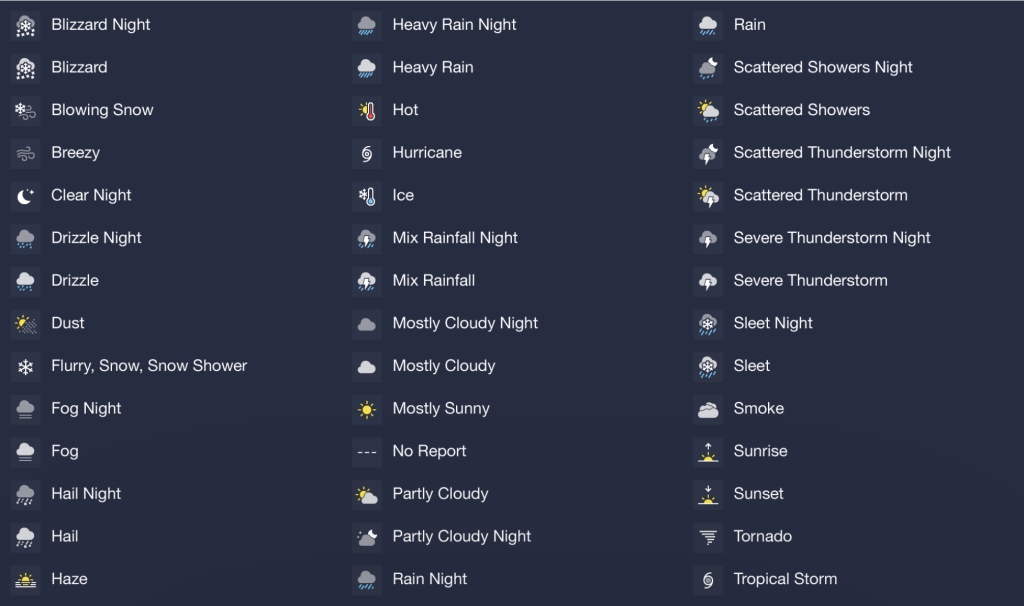
Sun and Cloud Icons – What They Tell You
Read also : Google Maps Icons and Symbols: What They Mean ?
Clear or Sunny icon
- Characteristics: A shining sun or a predominantly clear sky.
- Application: Perfect for activities outdoors, like running or taking photographs.
Partly cloudy vs Mostly cloudy
- Explain the difference between light clouds and heavily cloudy icons.
- Application: Suitable for doing errands but perhaps pack sunglasses anyway.
Fully Cloudy and Overcast Skies
- Icon description and interpretation of dense clouds.
- Hint: Always have a fallback plan for indoor activities for long-term events.
Rain and Water‑Based Icons
Light rain vs Heavy rain Explained
- Identify the conventional icon for rain and that for heavy rain.
- Explanation: The icon for heavy rain usually has a high percentage of rainfall and even the possibility of floods.
Drizzle and light showers
- Identify the icon for lighter rain.
- Usage: Light rain footwear or even an umbrella is sufficient.
Thunderstorms and lightning Symbols
- Identify the thunderstorm icon (lightning with a cloud).
- Explanation: Normally comes with high chances of winds, rain, and storms; avoid playing outdoor games.
Snow, Ice, and Winter Weather Icons
Snow and Scattered snow
- Explain the snowflake icon and scattered‑snow variation.
- Use case: Watch for slippery footpaths and possible school/work delays.
Heavy snow and Blizzard icons
- Describe heavier snow and blizzard‑like icons.
- Safety note: These can mean travel disruption and poor visibility.
Sleet, Freezing rain, and hail
- Explain mixed‑precipitation icons (sleet, freezing rain) and hail symbol.
- Emphasize: Extra‑slippery roads, fragile plants, and possible power‑line issues.
Fog, Haze, Smoke, and Air Quality‑Related Icons
Fog and Low Visibility Conditions
- Icon for fog and its effects on visibility.
- Application: Drive carefully, particularly when it is dark or on expressways.
Haze and smoke Warnings
- Describe icons for haze and smoke and their relationship with air-quality warnings.
- Hint: Individuals with asthma or lung problems should use both weather and air-quality apps.
WIndy and Dusty Weather Icons
- Describe icons for dusty or windy conditions and their link to gusty weather.
- Application: Shield your eyes, fasten anything outside, and reconsider outdoor events.
Sunrise, Sunset, and Extreme Temperature Icons
Sunrise and Sunset Indicators
- Discuss how these icons may be present in certain weather forecasts.
- Application: Useful to photographers, early morning runners, and those who plan activities at night.
Extreme Heat and Cold Symbols
- Explain the icons representing extreme heat and cold.
- Warning: Keep hydrated when hot and protect yourself from frostbite in extremely cold conditions.
Common Mistakes When Reading Apple Weather Icons
Ignoring night‑time Weather Changes
- Describe why humans emphasize daytime icons while ignoring the fog or rain that occurs at night.
- Hint: Take a quick look at the hourly forecast during your nighttime activities.
Overlooking haze, smoke and wind alerts
- Observe that certain people only observe the sun and rain signs while overlooking other significant signs.
Not Cross-Checking Local Weather Warnings
- Advise readers to compare the Apple signs with any local severe storm warnings or news reports.
Why This Guide Is More Useful Than a Basic Icon List
- Comparison: Pages are filled with icons that lack examples of impact on people.
- Highlight: This piece not only explains the icons but also provides application scenarios and safety precautions for them.
- Value addition: Organized according to conditions (sunny, rainy, snowy, pollution, extreme weather).
Conclusion
Every symbol in Apple Weather represents something specific such as sunshine, clouds, snow, hail, fog, and temperature extremes.Reinforcement: Knowing these symbols will enable you to be better prepared for your workouts, commute, travels, and events. And if you found this article helpful, share it with your friends.for more subscribe newssy.in.