




How Automation is Transforming Risk Detection and Clause Extraction
Introduction Understanding Risk Detection and Clause Analysis The Impact of Automation on Risk Analysis Technologies Powering Automation Major Advantages of Automation Step-by-Step Clause Extraction...

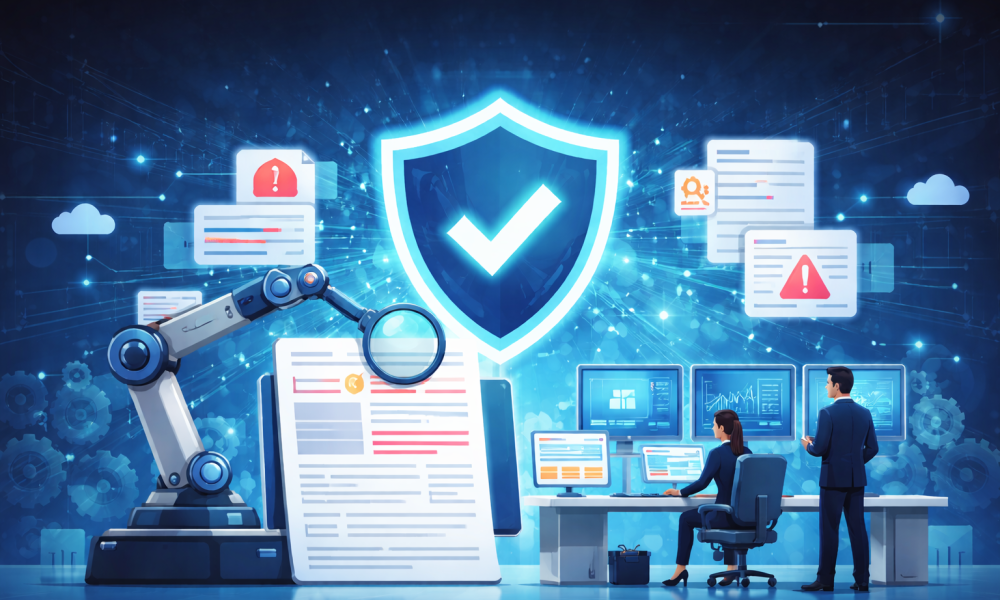
Introduction
- Opening statement with statistics: The risk associated with manually reviewing contracts will amount to $10 million in 2026; automation can reduce this risk by 70%.
- The article highlights how automation is revolutionizing risk detection and clause extraction through artificial intelligence and machine learning.
- Perfect for legal professionals, contract managers, and business executives seeking increased efficiency.
Understanding Risk Detection and Clause Analysis
- Clause Extraction Definition: AI analyzes contracts to identify important clauses such as liabilities, SLAs, and penalties.
- Risk Detection Definition: Detecting non-compliance, uncertainties, or high-risk clauses such as indemnity or termination clauses.
- Comparing Manual and Automated Processes: The manual approach misses 30% of risks, while automation achieves 95% accuracy using NLP.
The Impact of Automation on Risk Analysis
Technologies Powering Automation
- Parsing Legal Language with NLP and LLMs: To Identify Risks in Real-Time.
- Machine Learning Models: Can Learn via Feedback Loops to Improve Over Time.
Major Advantages of Automation
- Time-Savings: Reviews within Minutes, not Days, Cut by 80%.
- Precision: Understands 1,200+ Data Fields Without Errors.
- Fees Saved: Fewer Legal Battles and Compliance Fines.
Step-by-Step Clause Extraction Workflow
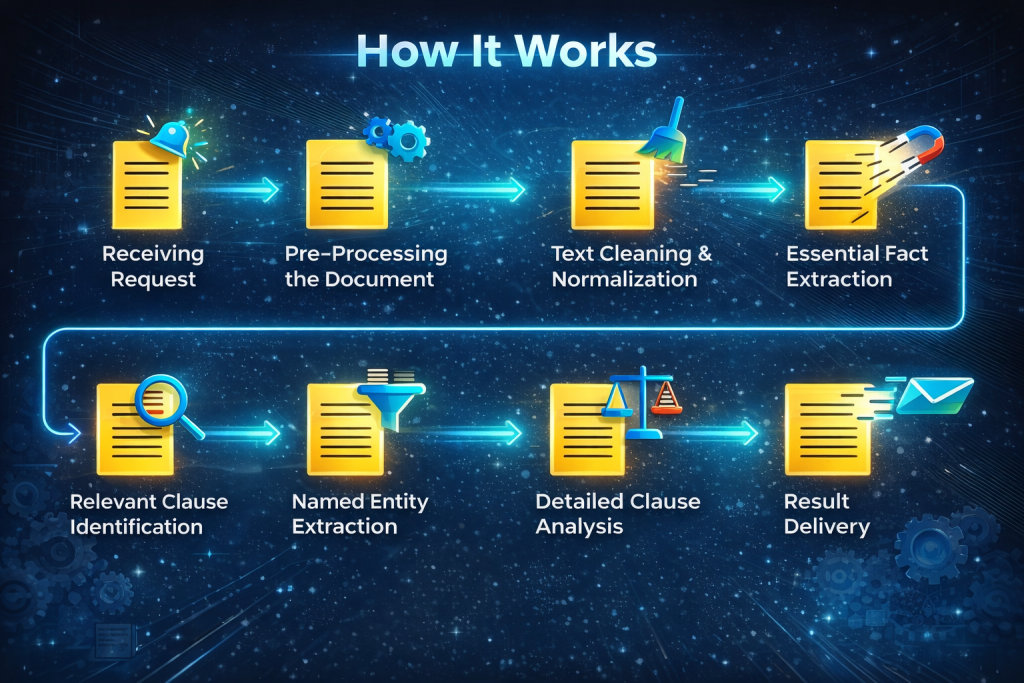
How Clause Extraction Works
Read also : IEM vs AirPods: Which Offers Better Sound Quality?
Table Of Content
- Introduction
- Understanding Risk Detection and Clause Analysis
- The Impact of Automation on Risk Analysis
- Technologies Powering Automation
- Major Advantages of Automation
- Step-by-Step Clause Extraction Workflow
- How Clause Extraction Works
- Practical Applications
- Leading AI Tools for Contract Analysis in 2026
- Benefits and Limitations of Automation
- Emerging Trends in Contract Automation
- FAQ
- Final Thoughts
- Contracts uploaded on the AI-powered platform.
- AI extracts and categorizes different clauses (such as change-of-control or non-compete).
- Data mining and structuring for dashboard reporting.
- Manual intervention only on edge cases to improve machine learning.
- Software allows continuous updates to keep track of obligations.
Practical Applications
- Due Diligence in Law: To Identify Risks in Many Contracts at Once.
- Compliance Management: For Proactive Renewals and Expiration Dates.
- Procurement: To Identify Risky Terms Before Signing.
Leading AI Tools for Contract Analysis in 2026
| Tool | Key Features | Strengths | Best For |
| Sirion | 1,200+ fields, LLMs, real-time tracking | High accuracy, integrations | Enterprise CLM |
| Ironclad | Clause classification, playbook automation | Workflow speed | Mid-market |
| DocuSign | NLP extraction, risk insights | Ease of use | SMBs |
| Icertis | ML explainability, compliance | Complex contracts | Global deals |
Benefits and Limitations of Automation
- Advantages: Preemptive risk management, improved transparency, data-backed decision-making.
- Disadvantages: Set-up expenses, data integrity requirements, dealing with existing contracts.
- Crossing obstacles: Start with pilot projects, train teams, select scalable platforms.
Emerging Trends in Contract Automation
- AI-based generation of clauses and simulations.
- Incorporating blockchain technology for risk recordkeeping.
- Predictive analytics for identifying future contract disputes.
FAQ
- What is clause extraction through artificial intelligence?
AI employs natural language processing to extract and organize certain clauses from contracts for analysis and monitoring at a speed impossible with manual processes.
- How does automation help detect risks?
It identifies concealed risks such as non-compliance instantly, reducing review time by 80% while increasing precision to 95%.
- Which tools will be the best for clause extraction in 2026?
According to Gartner, Sirion, Ironclad, DocuSign, and Icertis top the list, with LLM-driven extraction and risk analysis features.
- Is automation capable of dealing with complicated legal language?
Certainly, LLMs and machine learning algorithms interpret ambiguities with human intervention ensuring 99% accuracy for exceptional cases.
- What advantages can automation provide in contract management?
Speedy reviews, reduced expenses, compliance, and centralized reporting for informed decision-making.
- Automation security for critical contracts?
Best software includes encryption and secure storage, ensuring GDPR/CCPA compliance.
- How can you implement automation for risk detection?
Select your software, integrate into process flow, educate your team, and track KPIs such as review time.
- What are the gaps in automation?
Few edge cases; however, feedback processes reduce them greatly—always do human checks.
Final Thoughts
- Automation is revolutionizing risk management and clauses extraction through creating strategic contracts rather than liabilities.
- Important lessons: Automation accelerates efficiency and accuracy, best software is Sirion, and being proactive saves money.
- Are you ready for automation? Check out Sirion or Ironclad free trials now For more tech guides, subscribe to newsy.in







No Comment! Be the first one.