




UGC Rules 2026 Explained: What Are UGC Rules for Colleges & Students? (Complete Guide)
UGC rules are the University Grants Commission's regulations ensuring equity and standards in Indian higher education, with 2026 updates mandating anti-discrimination measures via Equal Opportunity...

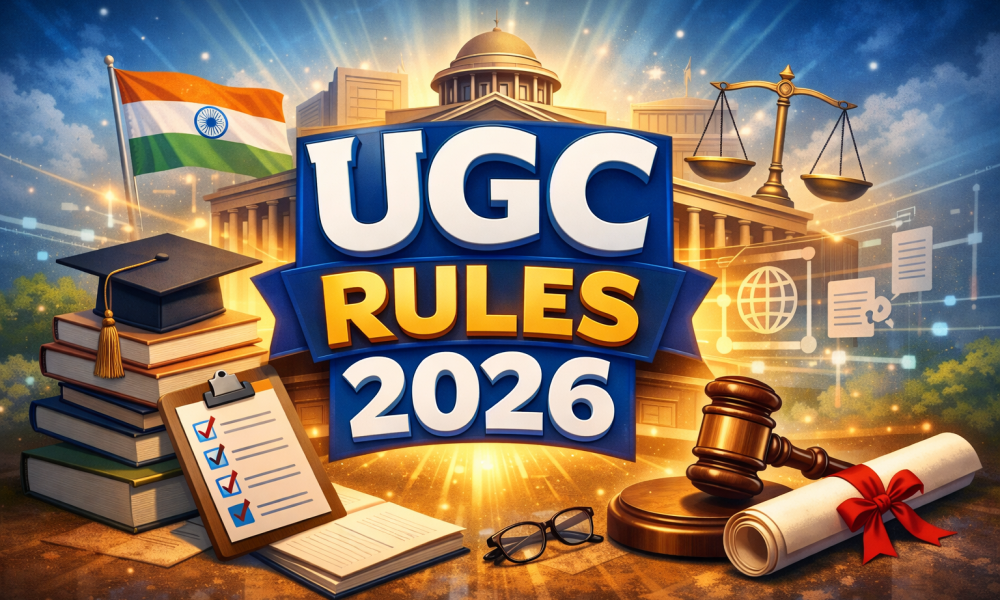
UGC rules refer to the regulations issued by the University Grants Commission (UGC), India’s statutory body for maintaining standards in higher education, with the latest major update being the Promotion of Equity in Higher Education Institutions Regulations, 2026, which mandate anti-discrimination measures, equity committees, and strict compliance for universities and colleges. These rules ensure fair treatment for students, faculty, and staff from all backgrounds, including SCs, STs, OBCs, women, and persons with disabilities, by requiring Equal Opportunity Centres (EOCs) and penalties for violations. In essence, they promote an inclusive campus environment free from bias based on caste, gender, religion, or other factors.
Table Of Content
- UGC Full Form and History
- What Are UGC Rules? Core Framework
- UGC Rules 2026: Key Provisions
- Institutional Mechanisms Under UGC Rules
- Monitoring and Penalties
- Other Major UGC Rules for Students and Colleges
- Why UGC Rules Matter: Real-World Impact
- Controversies Around UGC Rules 2026
- How to Check UGC Compliance for Your College
- Future of UGC Rules and NEP Alignment
Read Also ChatGPT Prism Explained: The Truth, Uses & Why It’s Trending Everywhere (2026)
UGC Full Form and History
The UGC, or University Grants Commission, was established in 1956 under an Act of Parliament to coordinate, determine, and maintain higher education standards across India. It originated from recommendations in the 1944 Sergeant Report and was formally inaugurated in 1953 by Maulana Abul Kalam Azad, evolving from a grants committee formed in 1945. Headquartered in New Delhi with regional centers in cities like Bhopal and Pune, UGC allocates funds, recognizes universities, and enforces quality norms, making its rules binding for over 1,000 institutions.
Today, UGC oversees central, state, private, and deemed universities, publishing lists of fake institutions to protect students. Its evolution aligns with national policies like NEP 2020, emphasizing equity and inclusion.
What Are UGC Rules? Core Framework
UGC rules encompass a wide range of regulations on curriculum, faculty qualifications, infrastructure, admissions, and now equity under the 2026 update. They are notified via gazette and apply to all higher education institutions (HEIs) receiving UGC grants or recognition. Key principles include minimum standards for degrees, anti-discrimination, and grievance redressal, ensuring degrees from compliant institutions are valid nationwide.
Unlike advisory guidelines, violations like non-compliance with equity norms can lead to debarment from schemes, program restrictions, or recognition withdrawal. This makes UGC rules enforceable, backed by constitutional articles like 14, 15, and 17 prohibiting discrimination.
UGC Rules 2026: Key Provisions
Notified on January 13, 2026, the Promotion of Equity Regulations target caste-based and other discrimination, expanding from 2012 rules. Discrimination is defined broadly as direct or indirect unfair treatment based on caste (SCs, STs, OBCs), religion, gender, disability, race, or birthplace, covering students, faculty, and staff.
Institutions must eliminate bias, promote inclusion, and create safe campuses. This update responds to rising complaints, with explicit OBC protections and coverage for online learners.
Institutional Mechanisms Under UGC Rules
Every HEI must establish an Equal Opportunity Centre (EOC) to handle complaints, raise awareness, and support disadvantaged groups. EOCs promote equity, sensitize stakeholders, and maintain online reporting portals.
Under EOCs, Equity Committees—chaired by the institution head—include professors, staff, civil society reps, and students, with mandatory SC/ST/OBC/women/disability representation. They meet twice yearly, submit bi-annual reports, and ensure inclusive admissions. An Ombudsperson handles appeals for unresolved grievances, with binding decisions.
Read Also Unleash GTA 6 Mastery: Your Epic 2026 Power Guide
Monitoring and Penalties
UGC’s national monitoring committee, with statutory and civil society members, oversees compliance, reviews complaints, and meets biannually. Institutions file annual equity reports with UGC.
Non-compliance triggers penalties: exclusion from grants, bans on degrees/online programs, or derecognition. Heads are personally accountable, shifting from symbolic to real enforcement.
Other Major UGC Rules for Students and Colleges
Beyond equity, UGC regulates academics: colleges need qualified faculty (PhD for professors), updated curricula with electives, and infrastructure like labs/libraries. The 2025 UG/PG regulations introduce multiple entry/exit (certificate at 1 year, degree at 3, honors at 4), biannual admissions, and 50% skill credits via ABC.
NET qualifiers get lectureships/JRF; unrecognized degrees are invalid. Rules also cover reservations, preventing fake universities.
Why UGC Rules Matter: Real-World Impact
Caste discrimination erodes access, causing higher dropouts (e.g., Thorat Committee 2007 noted hostel segregation). UGC 2026 rules counter this, boosting social mobility—reserved category enrollment rose 20% in elite institutes post-similar reforms. For students in Madurai or Tamil Nadu, compliant colleges like those under UGC ensure safe, equitable learning, vital for competitive exams.
In my view as an education watcher, these rules humanize campuses: imagine a first-gen OBC student thriving without bias, contributing to India’s skilled workforce.
Controversies Around UGC Rules 2026
Critics argue the rules politicize campuses by mandating caste quotas in committees, potentially reverse-discriminating others. OBC inclusion is praised but seen as vote-bank politics; some fear overreach stifling merit. Supporters highlight enforcement gaps in 2012 rules, with rising complaints justifying change.
Debate continues, but data shows discrimination persists—UGC complaints up 15% yearly.
How to Check UGC Compliance for Your College
Visit ugc.gov.in for approved lists, fake university alerts, and regulation PDFs. Search your college’s status; check for EOC/Equity Committee on their site post-2026. Students: Verify via ABC for credits; file grievances via EOC portals.
Future of UGC Rules and NEP Alignment
Aligned with NEP 2020, expect expansions to AI ethics, hybrid learning. By 2027, full digitization of compliance via UGC portal anticipated. These rules position India for equitable, world-class education.







No Comment! Be the first one.