




Pipe Cleaner Flower: Easy DIY Tutorial for Kids and Beginners
Pipe cleaner flowers are simple, bendable “fake flowers” made by twisting colorful pipe cleaners into petals, a stem, and leaves so kids and beginners can create a cute, long-lasting bouquet in under...

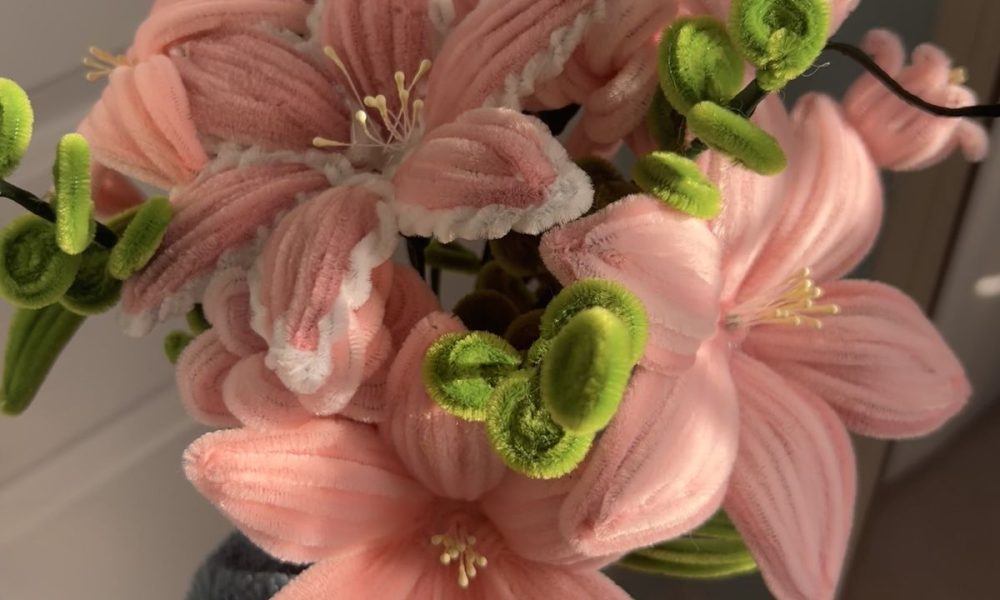
Pipe cleaner flowers are simple, bendable “fake flowers” made by twisting colorful pipe cleaners into petals, a stem, and leaves so kids and beginners can create a cute, long-lasting bouquet in under 15 minutes with just a few supplies. They are perfect for spring crafts, Mother’s Day gifts, classroom projects, and decorations because they are cheap, safe for kids, and can be customized into daisies, tulips, roses, lilies, or any fantasy flower you imagine.
Table Of Content
- What Is a Pipe Cleaner Flower?
- Why Make Pipe Cleaner Flowers?
- Basic Supplies You Need
- Step‑by‑Step: Simple Pipe Cleaner Flower (Beginner)
- Step 1: Prepare Petals and Stem
- Step 2: Bundle and Twist the Center
- Step 3: Form the Petals
- Step 4: Shape the Leaf
- How to Make Different Pipe Cleaner Flowers
- Daisy-Style Pipe Cleaner Flower
- Tulip or Rose Style Pipe Cleaner Flower
- Lily-Style Pipe Cleaner Flower (Intermediate)
- Creative Ways to Use Pipe Cleaner Flowers
- Tips for Realistic and Long‑Lasting Flowers
- Common Questions About Pipe Cleaner Flowers
- How long does it take to make one pipe cleaner flower?
- Are pipe cleaner flowers safe for children?
- Do I need special pipe cleaners?
- Can I follow along with video tutorials?
What Is a Pipe Cleaner Flower?
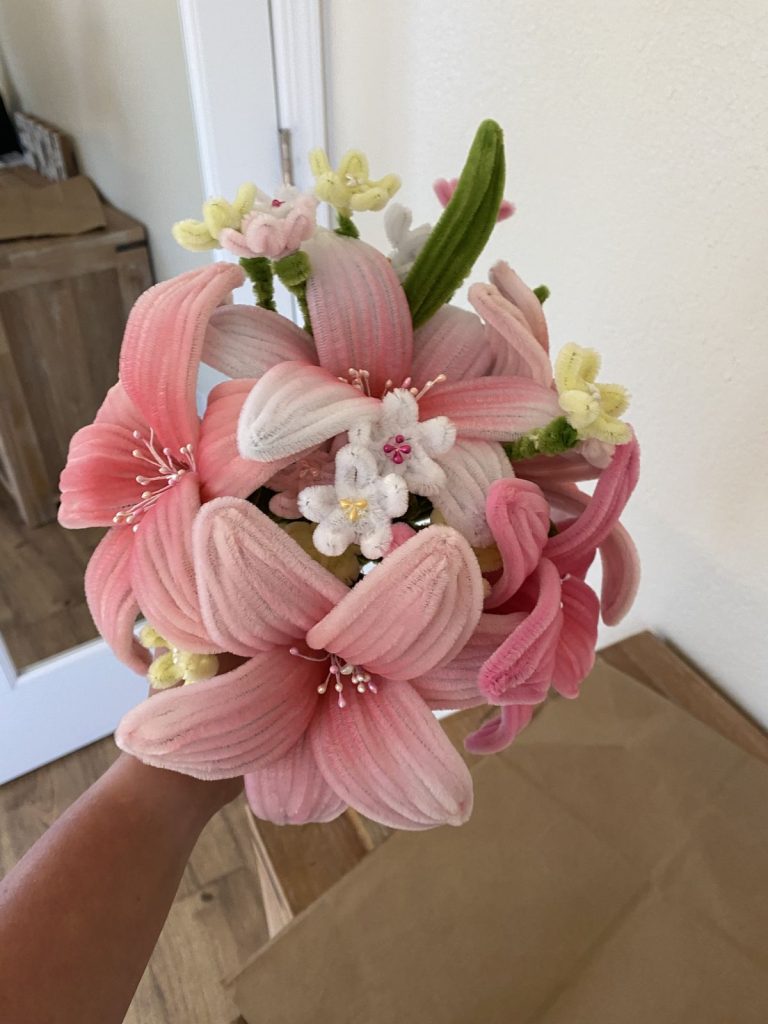
A pipe cleaner flower is a handmade craft flower made from fuzzy chenille stems (pipe cleaners) shaped into petals and attached to a stem and leaves. You can keep the whole flower 100% pipe cleaners or combine them with floral wire, tape, beads, and buttons for more realistic detail.
Most people use standard 12‑inch pipe cleaners, bending and twisting them into spirals or loops for petals, then adding a green stem and leaves. The result is a bright, soft flower that never wilts and can be reused for decor or play.
Read Also ChatGPT Prism Explained: The Truth, Uses & Why It’s Trending Everywhere (2026)
Why Make Pipe Cleaner Flowers?
Here are practical reasons crafters and parents love this craft:
- Very easy for kids and beginners; most flowers take around 10 minutes each.
- Cheap materials: you mainly need pipe cleaners and basic tools like scissors and glue.
- No mess compared to paint or clay; ideal for quick classroom or home activities.
- Highly customizable: change colors, add beads, or mix petal styles to make unique bouquets.
- Great teaching tool to explain parts of a flower while doing a hands-on activity.
You can also reuse pipe cleaner flowers in several ways, like mini potted plants, crowns, and gifts.
Basic Supplies You Need
To make any pipe cleaner flower, keep these core supplies ready:
- Pipe cleaner chenille stems in green and multiple flower colors (yellow, red, pink, white, purple, etc.).
- Scissors or wire cutters for trimming stems and petals.
- Craft glue or hot glue gun (optional but useful for securing centers and heavy embellishments).
Nice-to-have extras for more advanced or realistic flowers:
- Floral wire and green floral tape to form stronger stems.
- Pony beads or perler beads to slide onto petals for texture.
- Buttons for the flower center, especially for daisy-style designs.
- Glitter or sequins for a sparkly finish.
If you are crafting with younger kids, prefer white glue and avoid very hot glue guns for safety.
Step‑by‑Step: Simple Pipe Cleaner Flower (Beginner)
This beginner method is ideal for kids and first-timers and uses only pipe cleaners and basic twisting.
Step 1: Prepare Petals and Stem
- Take 1 green pipe cleaner for the stem and 3 pipe cleaners in your chosen flower color (for example, yellow).
- Fold all 4 pipe cleaners in half and crease the ends so you can find the center easily.
Step 2: Bundle and Twist the Center
- Hold the 3 colored pipe cleaners together so they sit parallel to each other, with the folded ends aligned.
- Place the folded green pipe cleaner alongside them, then twist the green pipe cleaner once or twice around itself in the center to pinch all the colored stems together.
- Point one green end straight down as the main stem and leave the other pointing out for a side leaf later.
Step 3: Form the Petals
- Take one colored pipe cleaner end and roll it into a spiral, starting from the tip and winding toward the center until it sits near the stem.
- Repeat this spiral roll for all colored ends so each becomes a coiled petal.
- Adjust and pinch the spirals so they look even; you can bunch them close or spread them slightly for a fuller flower.
Step 4: Shape the Leaf
- Bend the extra green side stem into a loop, then pinch it into a leaf shape (like a pointed oval).
- Twist the base of this loop once to secure the leaf to the stem.
At this point you have a complete basic pipe cleaner flower that stands on its own and can be placed in a small vase, mug, or foam block.
Read Also Master Uber Icons & Symbols: Your Ultimate Easy Guide
How to Make Different Pipe Cleaner Flowers
Once you know the basic twist-and-roll technique, you can create many flower styles that match what’s popular in tutorials and blogs.
Daisy-Style Pipe Cleaner Flower
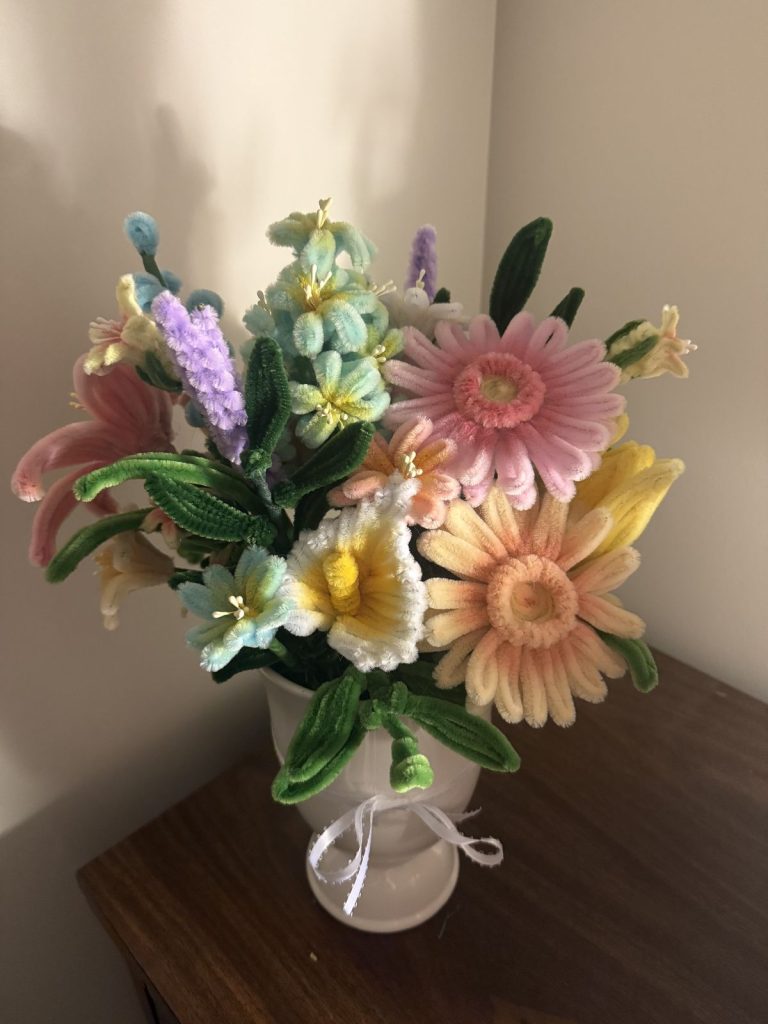
A daisy uses straight petals and a different center:
- Twist 3 pipe cleaners together in the center, then spread them out into 6 “spokes.”
- Curve each spoke into a loop and twist the ends back at the center to form long petals.
- Cut about one‑third of a contrasting color pipe cleaner (like orange), shape it into a circle, and glue it in the middle as the flower center.
- Thread a green pipe cleaner through the back and twist to create the stem and optional leaves.
This gives a flat, open flower that looks great on cards, crowns, or as part of a bouquet.
Tulip or Rose Style Pipe Cleaner Flower
You can also use the “twist-three-in-the-center” method to make tulip or rose shapes.
- Twist 3 colored pipe cleaners in the middle and spread them like spokes.
- Instead of wide open loops, bring each end up and around toward the top to form a cupped shape.
- Overlap the petals slightly and adjust them to resemble a closed tulip or tightly layered rose.
Adding a green stem and leaves the same way as the daisy keeps the design consistent across your bouquet.
Lily-Style Pipe Cleaner Flower (Intermediate)
For more realistic lilies, many crafters follow a slightly more involved DIY process.
Basic lily concept:
- Fold 2 pipe cleaners in half, then fold one of them again to create a tighter loop.
- Insert the other folded pipe cleaner through and twist twice to lock.
- Fold down the tails and twist at the bottom to form a long petal; repeat until you have about 6 petals.
- Gather petals around a pipe cleaner “stamen” in a contrasting color and secure with glue.
- Attach the flower to floral wire and wrap with green floral tape, adding 1–2 leaves about 10 cm below the bloom.
Video tutorials often show open lilies, daisies, tulips, and layered fantasy flowers using similar fold‑and-thread techniques.
Creative Ways to Use Pipe Cleaner Flowers
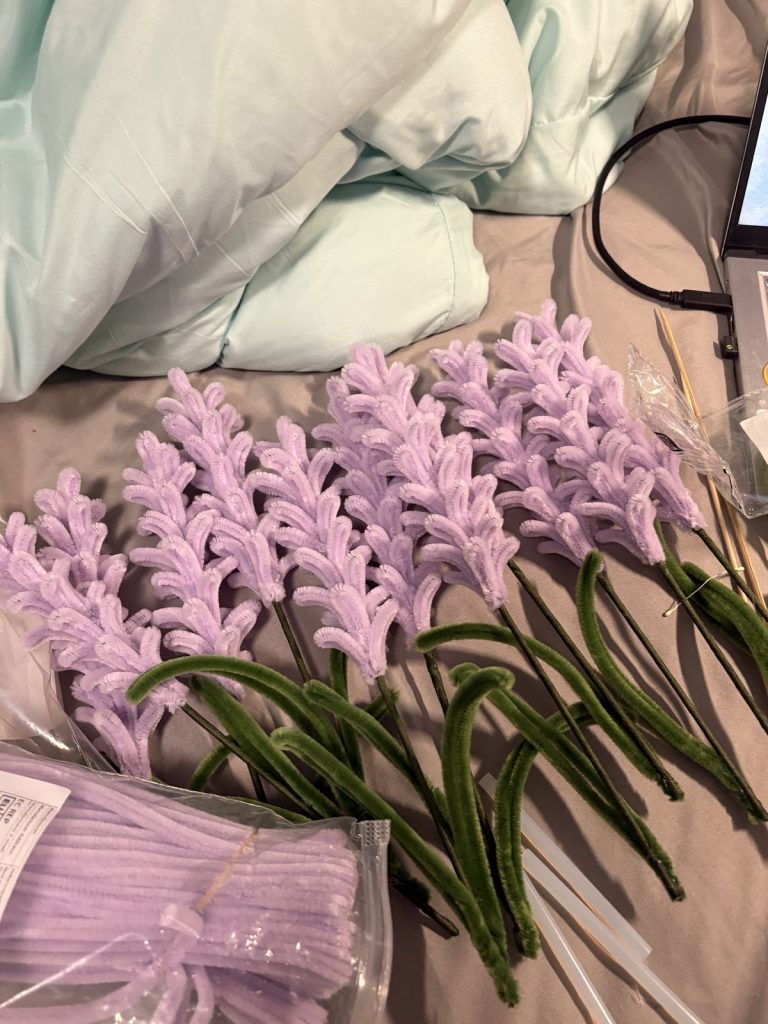
Once your flowers are ready, there are many fun ways to display or use them beyond a simple glass or jar.
- Mini indoor “potted plants”: Decorate a small pot, fill it with beans or foam, and “plant” the stems inside.
- Flower crowns: Attach flowers to a base headband or wire ring with extra pipe cleaners for wearable spring accessories.
- Classroom learning props: Use different colors to label petals, stem, leaves, and center while teaching plant parts.
- Gifts and party favors: Wrap a trio of pipe cleaner flowers with ribbon for Mother’s Day, birthdays, or party packs.
- Wall and desk decor: Tape or pin flowers on notice boards, photo frames, or pen holders.
You can even turn extra flowers into napkin rings or pencil toppers by twisting them around an object.
Read Also Epic Fable Awaits: Launch, Platforms, Price & Thrilling Details
Tips for Realistic and Long‑Lasting Flowers
To go beyond basic kid crafts and make polished, durable pipe cleaner flowers, use these expert-style tips inspired by popular tutorials:
- Choose high‑quality, fluffy pipe cleaners so petals look fuller and hide twists better.
- Mix shades of the same color (for example, dark and light purple) in each petal for more depth.
- Reinforce stems with floral wire if you’re making tall bouquets or big centerpieces.
- Use floral tape instead of plain tape so the stem looks neat, stays sticky, and feels like a real flower stem.
- Make a whole set of flower types—daisies, tulips, lilies—to create a varied bouquet instead of repeating just one style.
If you are crafting with kids, pre-cut any sharp wire and supervise glue use, especially with hot glue.
Common Questions About Pipe Cleaner Flowers
How long does it take to make one pipe cleaner flower?
Are pipe cleaner flowers safe for children?
Do I need special pipe cleaners?
Can I follow along with video tutorials?









No Comment! Be the first one.